Portugal: Why the Douro Valley Deserves a Week, Not a Day
A day trip to the Douro Valley is completely doable — and honestly, it can be a great day. Hop the train from Porto, tour a winery, eat lunch overlooking the terraces, and you'll go home with photos that look like a postcard. If a day is all you have, take it. It's worth it.
But give the Douro a full week instead, and it stops being a place you visited and starts being a place you actually experienced. Days 4 through 10 of a proper Portugal itinerary — Porto behind you, Lisbon still ahead — is where the trip slows all the way down. That's not a scheduling accident. It's the whole point.
The morning a day trip trades away
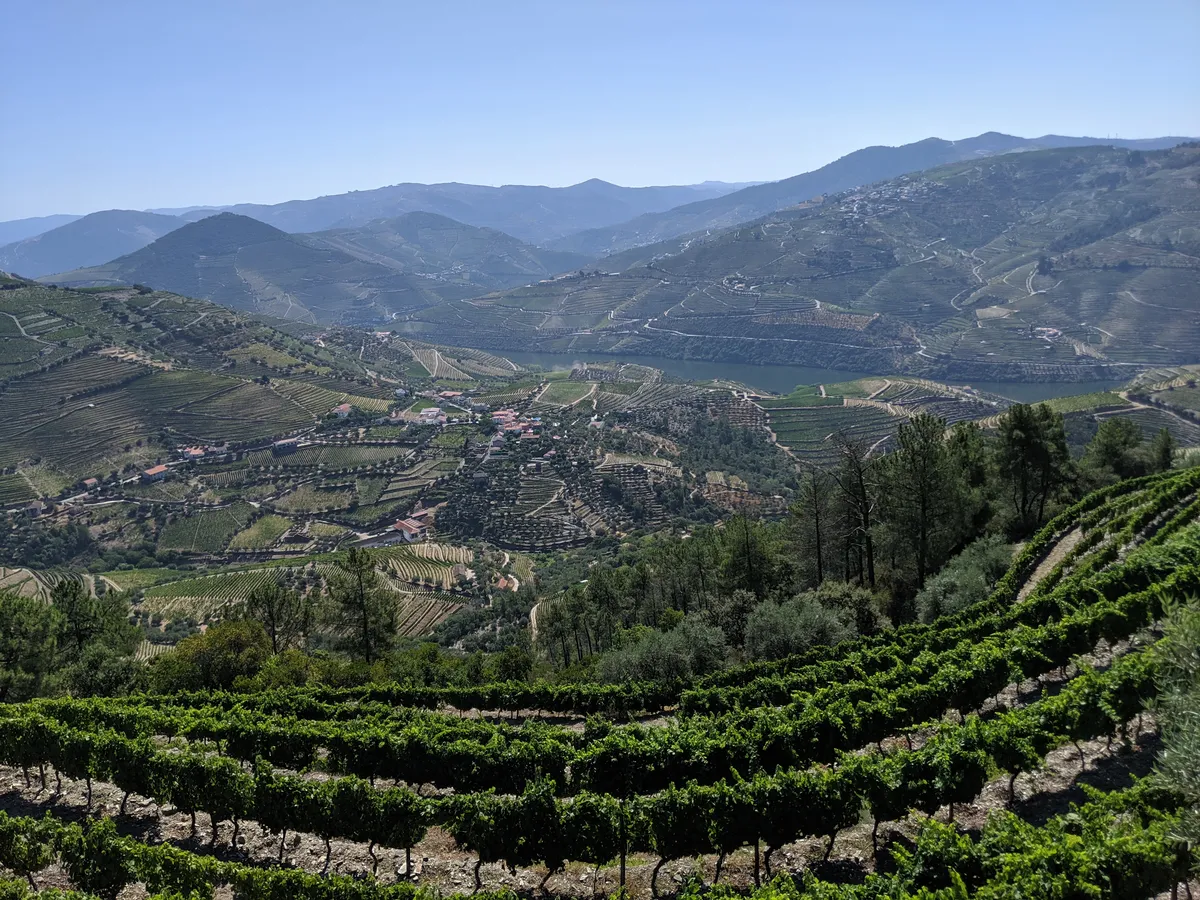
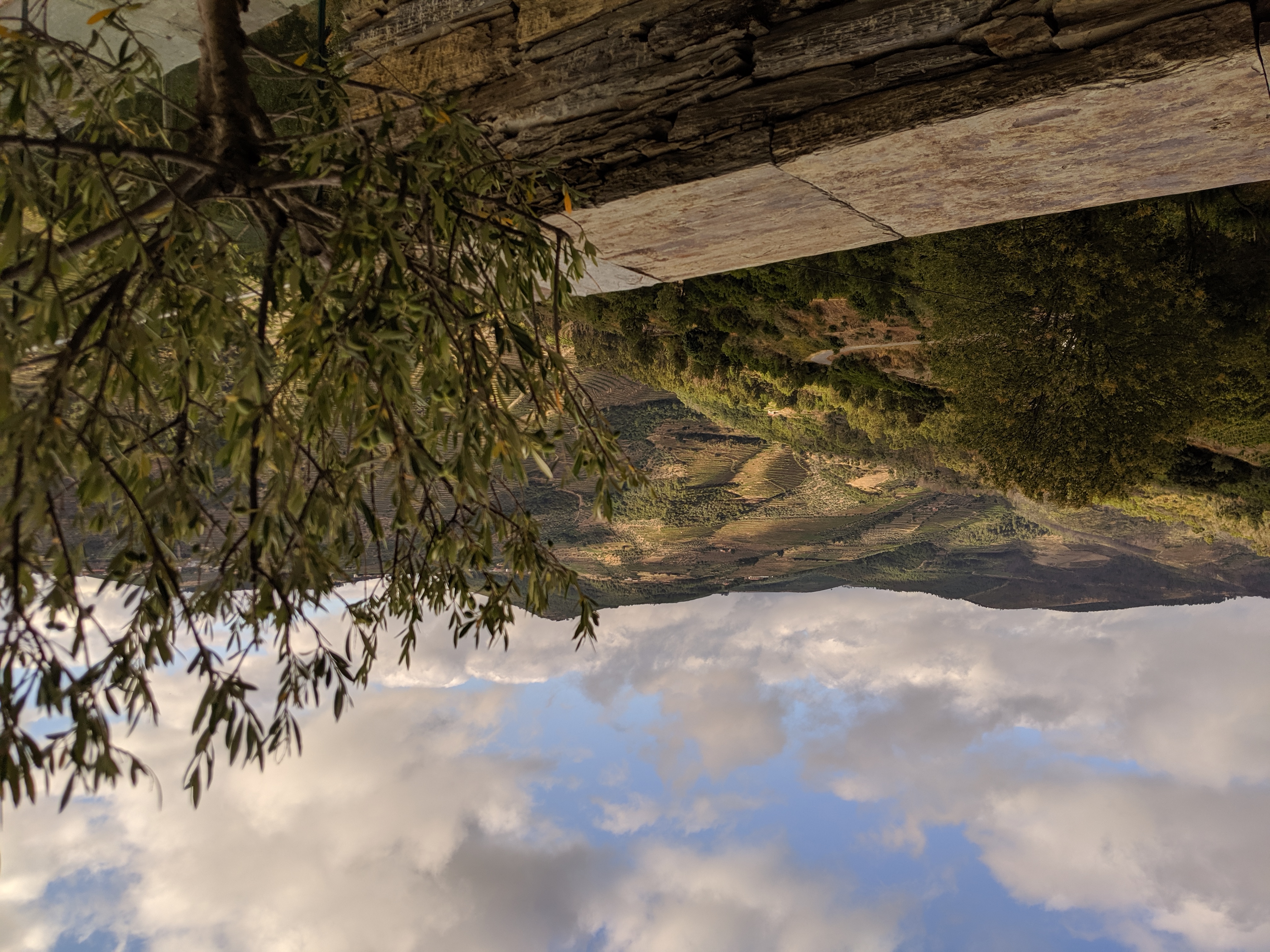
Stay overnight in the Douro and the first thing you notice isn't a sight — it's a sound. Somewhere down the hillside, a rooster starts up before the sun's properly over the ridge. There's no traffic to compete with it, no schedule pulling you out the door. Just terraced vineyards stepping down to the river, mist still sitting in the valley, and a slow cup of coffee on a terrace while the light changes over rows of vines that have been there for centuries.
A day trip can't buy you that morning at any price. A week gives you six or seven of them in a row.
The stay that makes the week: Lugar das Letras
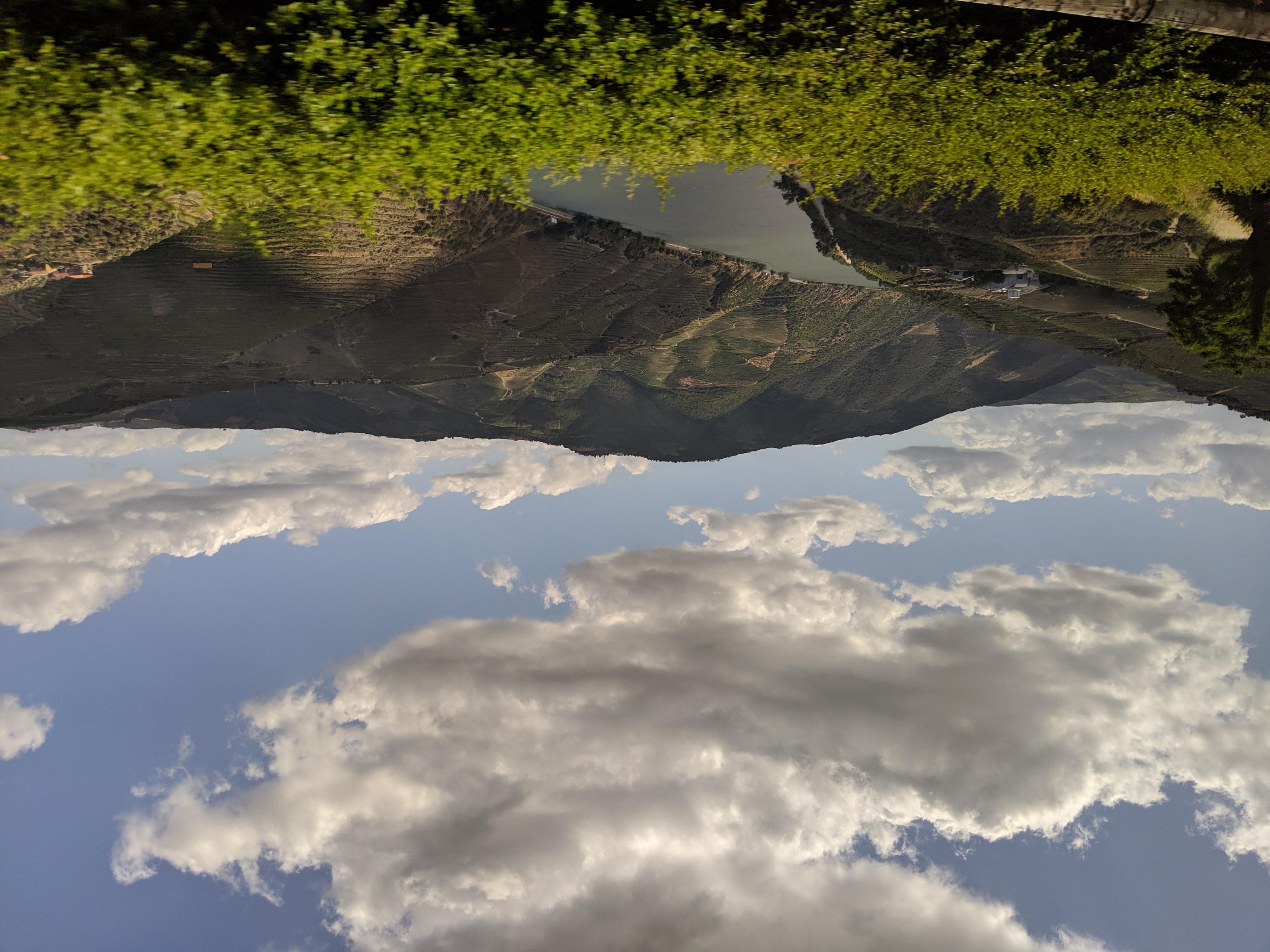
Out of every place we've ever stayed, Lugar das Letras is still at the top of the list. Yes, the views are extraordinary — the bedrooms look straight out over the valley, and the house and pool are the kind of beautiful that photos don't quite capture. What actually sets it apart is the service.
Want a wine tour booked? Done. A full fridge waiting when you arrive? Done. Help lining up activities for the week? Done. And it doesn't stop once you're checked in — the concierge, Carla, genuinely takes care of you for the whole stay. Fresh breakfast every morning, a home-cooked dinner during the week, and any arrangement you need handled without a second thought. It's the kind of place that makes a week feel effortless, which is exactly what a Douro week should be.
Arrive slow: trade the tour bus for the train
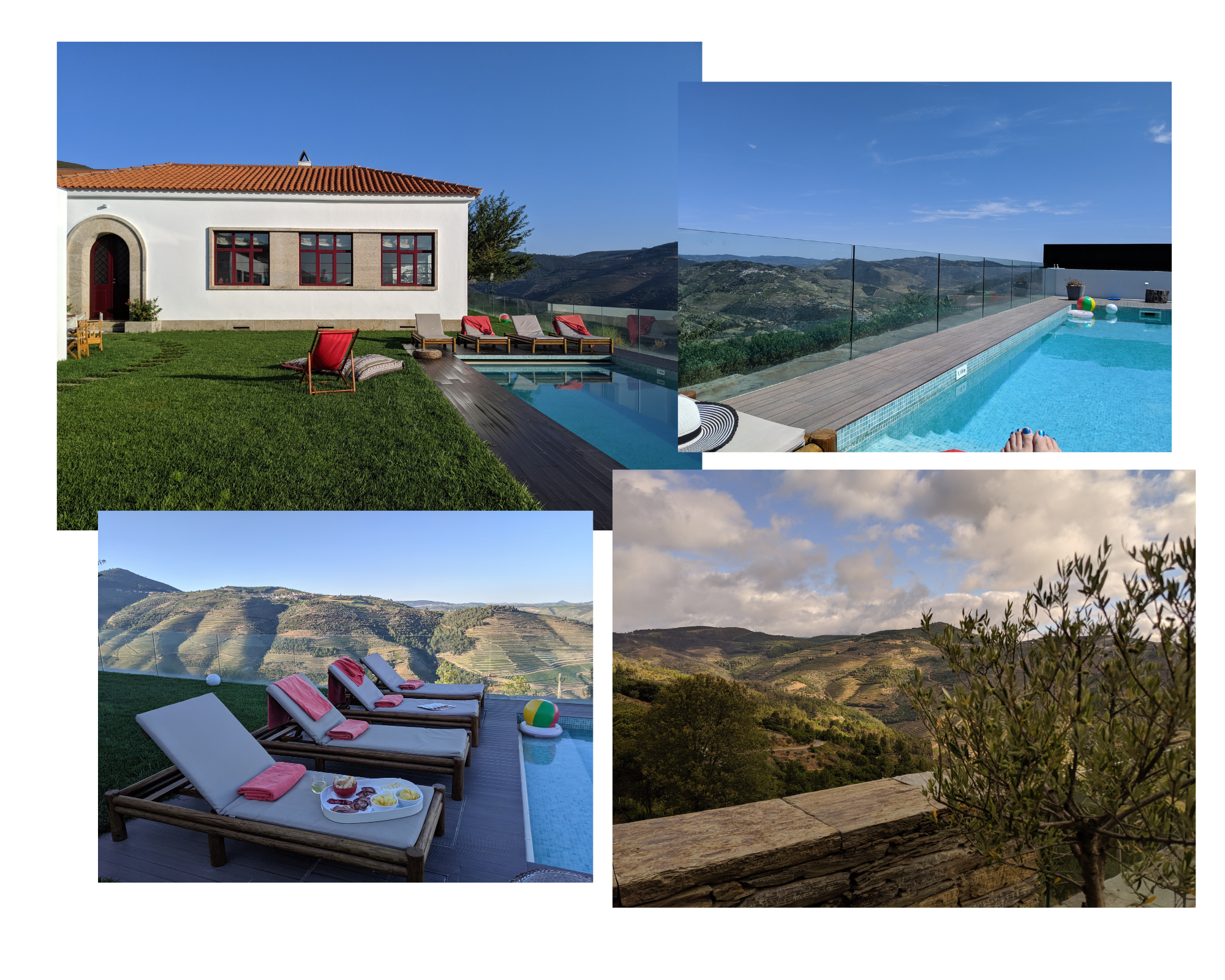
Start the week the right way — by rail instead of road. The Linha do Douro is one of the most scenic train journeys in Europe, tracing the river for roughly 100km past terraced vineyards, riverside villages, and tunnels blasted straight through granite cliffs when the line opened in 1887. Retro carriages, big windows, no Wi-Fi, no rush. Sit on the right leaving Porto for the best river views, then switch sides after Ferradosa.
For something even slower, the Historic Douro Train runs a heritage steam route between Peso da Régua and Tua between July and October, with traditional music and food on board — a genuinely nostalgic way to trace the same tracks that once carried Port wine barrels down to Porto.
A week means you're not racing this journey to fit in a day's worth of wineries on the other end. You can just let it be the first afternoon.
The middle of the week is for wine — and there's no rushing it
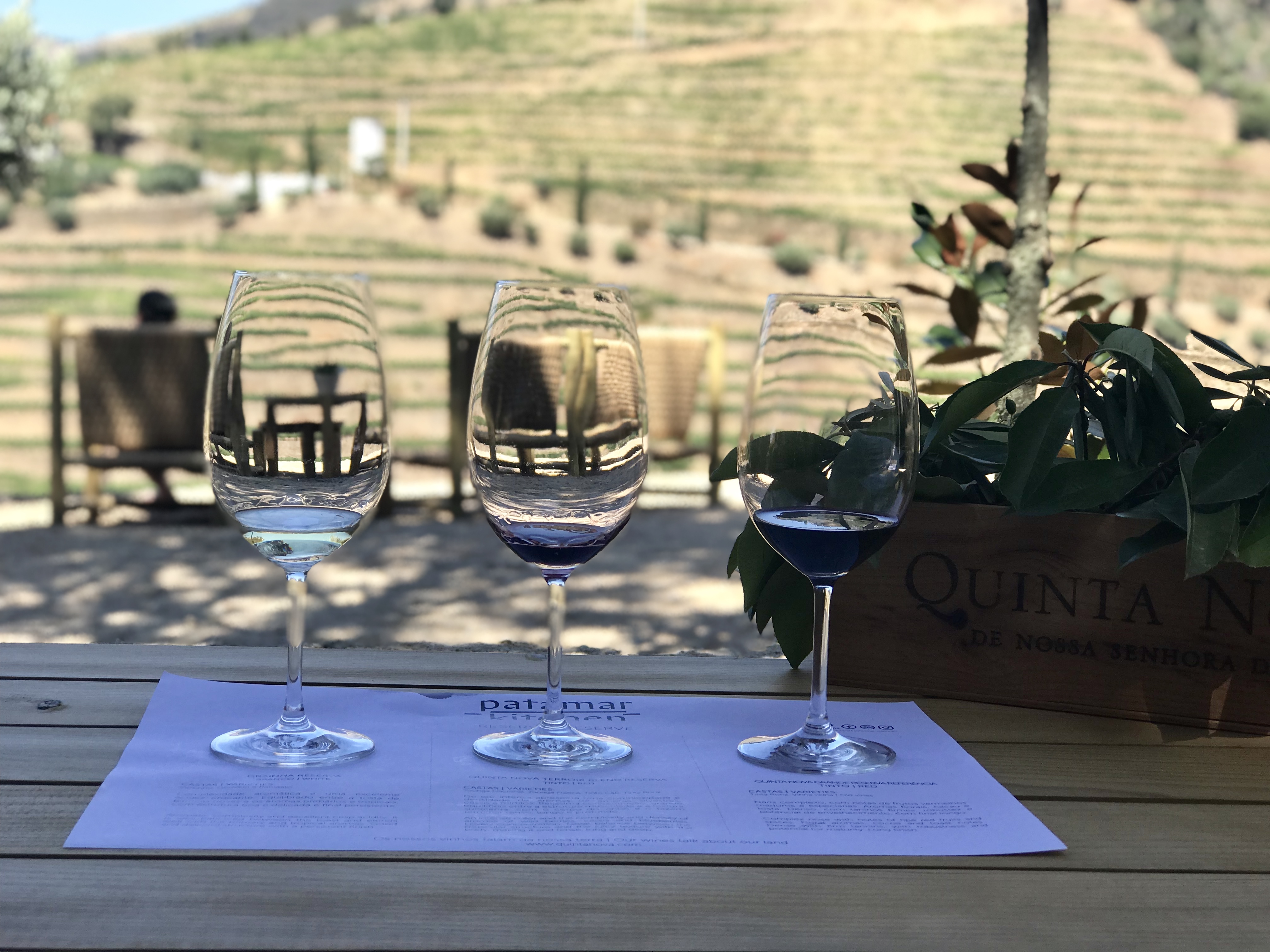
This is the heart of Days 4-10: unhurried time among the quintas. Wine and Soul, Quinta da Foz, Quinta Nova, Quinta da Pacheca — the Douro's producers are used to day-trippers moving through on a schedule, one tasting and out. A week changes that dynamic entirely. There's time for the private tasting room instead of the group tour, the far-flung quinta that's not on anyone's day-trip itinerary, the lunch that runs long because nobody's watching the clock.
Base yourself somewhere with a view of it all and let the days blur a little. That's not wasted time in the Douro — it's the whole reason to come.
A day for the water
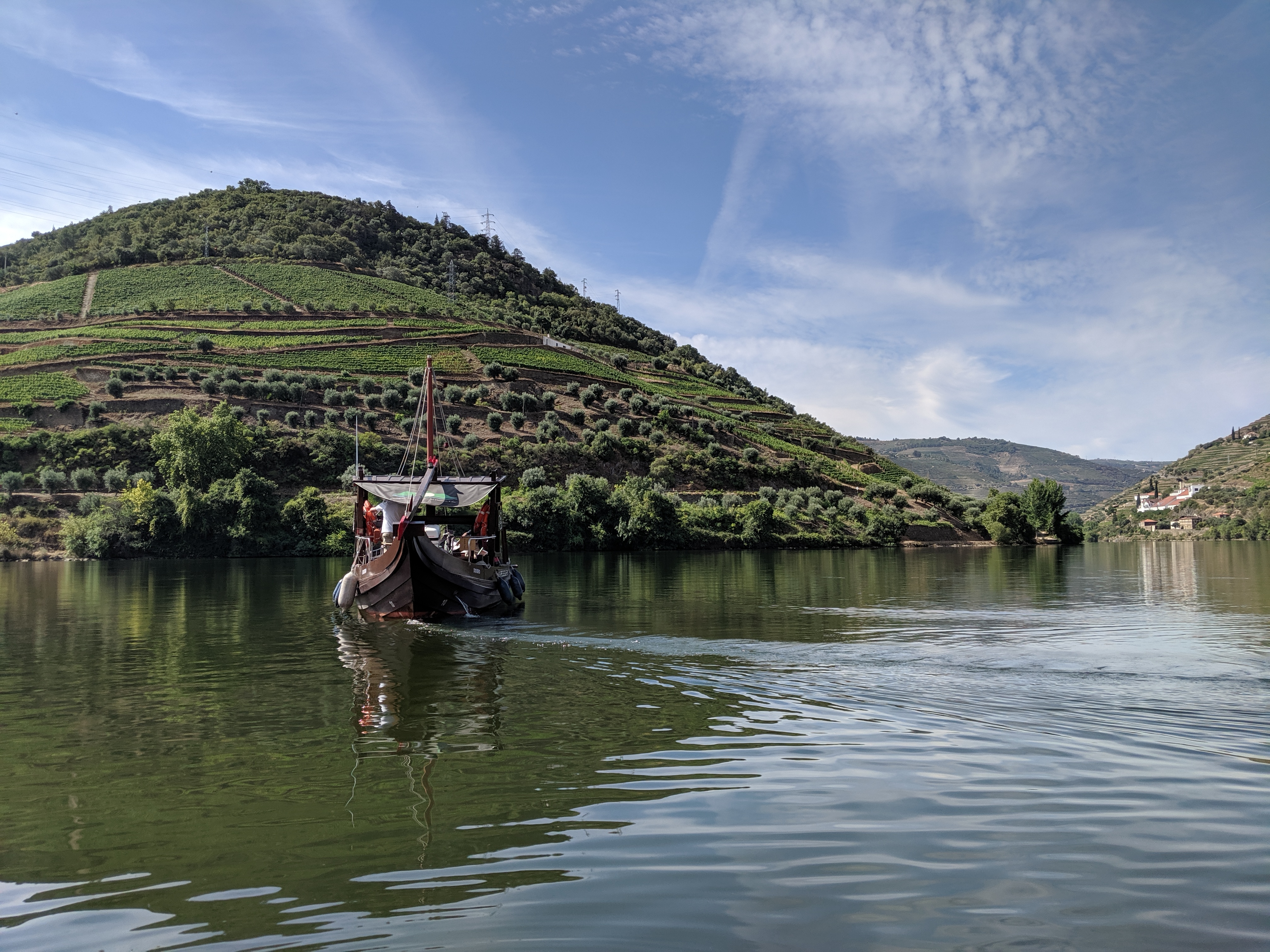
Somewhere in the middle of the week, get off the terraces and onto the river. The classic move is a rabelo boat cruise, the same flat-bottomed wooden boats once used to ferry Port down to Vila Nova de Gaia, gliding quietly past the terraces between Pinhão and the mouth of the Tua.
For something more active, several operators run a boat-then-kayak combo out of Pinhão: a leisurely hour upstream by boat to Foz Tua, then a 12km kayak back down to Pinhão, with stops at small riverside beaches to swim along the way. It's an easy, no-experience-required way to spend an afternoon in the water instead of just beside it — and on a day-trip schedule, there's simply no time for it.
The villages a day trip never reaches
Pinhão and Peso da Régua get most of the attention, and fairly — they're beautiful, well-connected, and full of good wineries within walking distance. But with a week instead of a day, there's time to go further:
Provesende — a hilltop village of noble manor houses and cobbled lanes, often called one of the most elegant settlements in the whole valley. An 18th-century church, an old fountain dated 1755, and views that stretch for miles.
Favaios — famous across Portugal for its Moscatel wine and traditional stone-oven bread, set on a plateau above the river with a completely different perspective on the valley.
São João da Pesqueira — one of the oldest municipalities in Portugal, home to an excellent interactive Wine Museum and the nearby São Salvador do Mundo viewpoint, one of the best panoramas in the Douro.
Lamego — technically just outside the valley proper, but worth the detour for its Baroque Sanctuary of Nossa Senhora dos Remédios and its own sparkling wine tradition, a nice counterpoint to all that Port.
None of these show up on a standard day-trip itinerary. They're what a week gets you that a day simply can't.
The case for the full week
A day trip gets you the highlight reel: one winery, one lunch, one viewpoint, one photo of the terraces. And again — that's genuinely fun, and worth doing if it's all the time you have.
But seven days here gets you the version of the Douro that made people fall in love with it in the first place: waking up to roosters instead of an alarm, an unhurried breakfast on a terrace overlooking vines instead of a coffee grabbed at the train station, an afternoon on the water, a wine tasting that isn't scheduled down to the minute, an evening in a village most visitors never see. Days 4 through 10 aren't a stopover between Porto and Lisbon — they're the slowest, best part of the whole trip. Give it the week.