Why Lille Is the Best Base for Canada's WWI Battlefields
As heard on Join Us in France. I recently joined Annie Sargent on episode 621 of the Join Us in France podcast to talk about travelling Northeast France. One topic we kept coming back to was Lille, and why it's the perfect base for Canada's WWI battlefields. Here's the longer version, built from our Canadian Battlefields of France & Belgium guide.
Most people plan a battlefield trip around the battlefields. Fair enough. But after four trips to this corner of France, we've learned it is important to consider where you go home to at night. And for Vimy, Beaumont-Hamel and Ypres, that place is Lille.
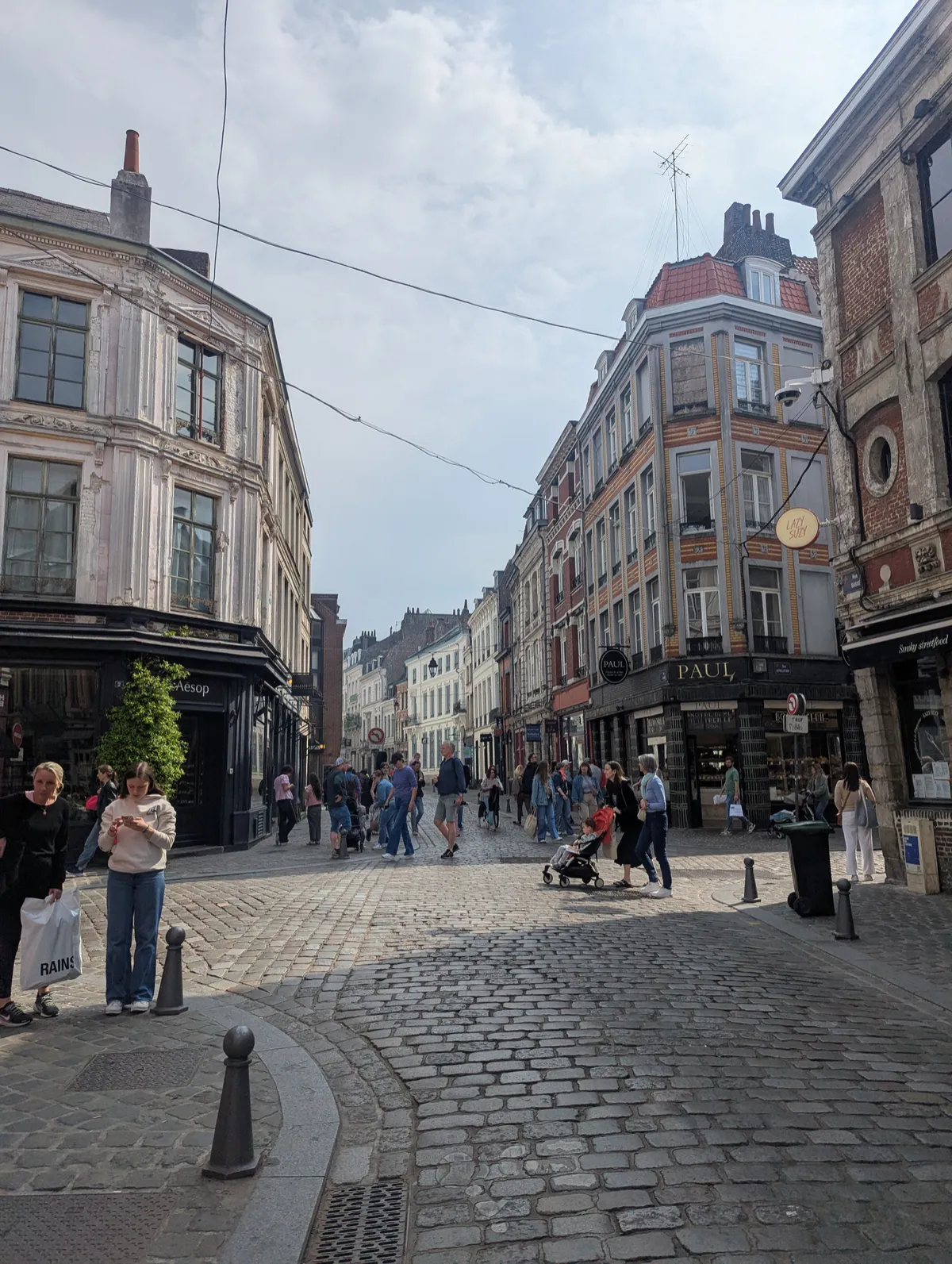
Lille sits almost perfectly between the Belgian memorials around Ypres and the French sites at Vimy and the Somme. It's close enough that every site is a comfortable day out. It's also big enough to be a destination in its own right: a lively university city full of patios, independent shops and some of the best comfort food in France. After a day of heavy history, that matters more than you'd think.
Day one: Flanders Fields and the Last Post
The Belgian side of the trip is best done as a long afternoon that ends at the Menin Gate. Leave Lille around 1:30 PM and it's roughly 50 minutes to your first stop.
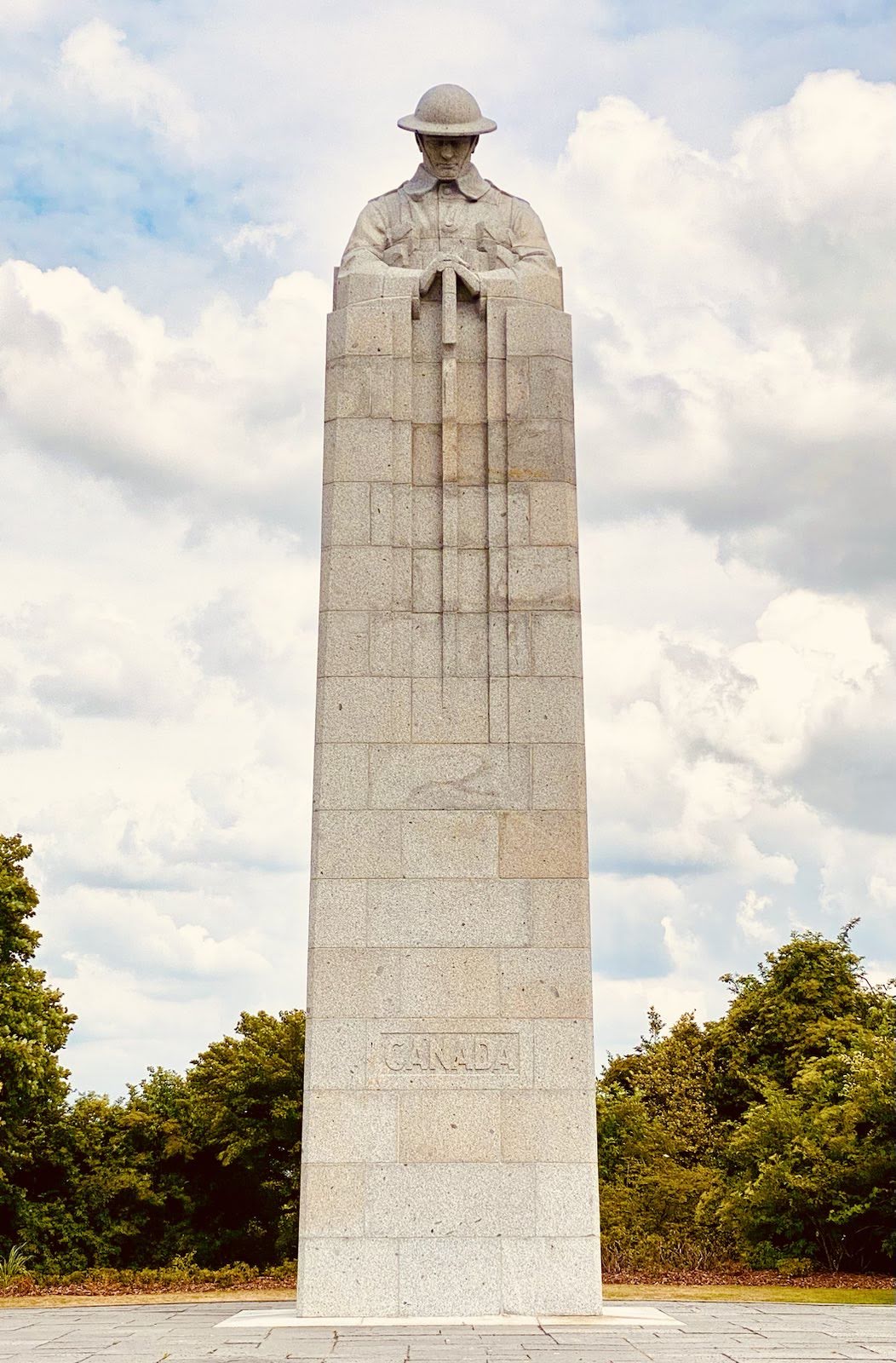
Start at the Passchendaele Canadian Memorial, a quiet and powerful place to begin. From there it's ten minutes to the Brooding Soldier at St Julien, a solitary Canadian soldier carved in stone, head bowed over his rifle, marking the site of the first large-scale gas attack of the war. It looks simple in photos. In person, it stops you in your tracks.
Next comes Langemark German Cemetery, a sobering contrast with its dark, low headstones under the oak trees. It's worth ten minutes just to see how differently the two sides are remembered. Then on to Essex Farm Cemetery, where Canadian doctor John McCrae wrote "In Flanders Fields." For any Canadian, this one is a must.
By 5 PM you'll be in Ypres itself. Grab a patio on the square, order the moules frites, and wander the rebuilt town centre. Then make your way to the Menin Gate for the Last Post at 8 PM. It has happened every single night since 1928, wartime years aside, including Christmas and New Year's. Arrive early for a good spot. You'll be back in Lille by about 9 PM.
Day two: Beaumont-Hamel, Arras and Vimy
The French side is Canada's most sacred ground, and it deserves a full day. Our go-to order is to start furthest away and work your way back toward Lille.
Begin at the Beaumont-Hamel Newfoundland Memorial, a little over an hour from Lille. This is where the Newfoundland Regiment was nearly wiped out in a single morning during the Battle of the Somme. The preserved trenches make it hard to look away. Don't miss the Danger Tree.
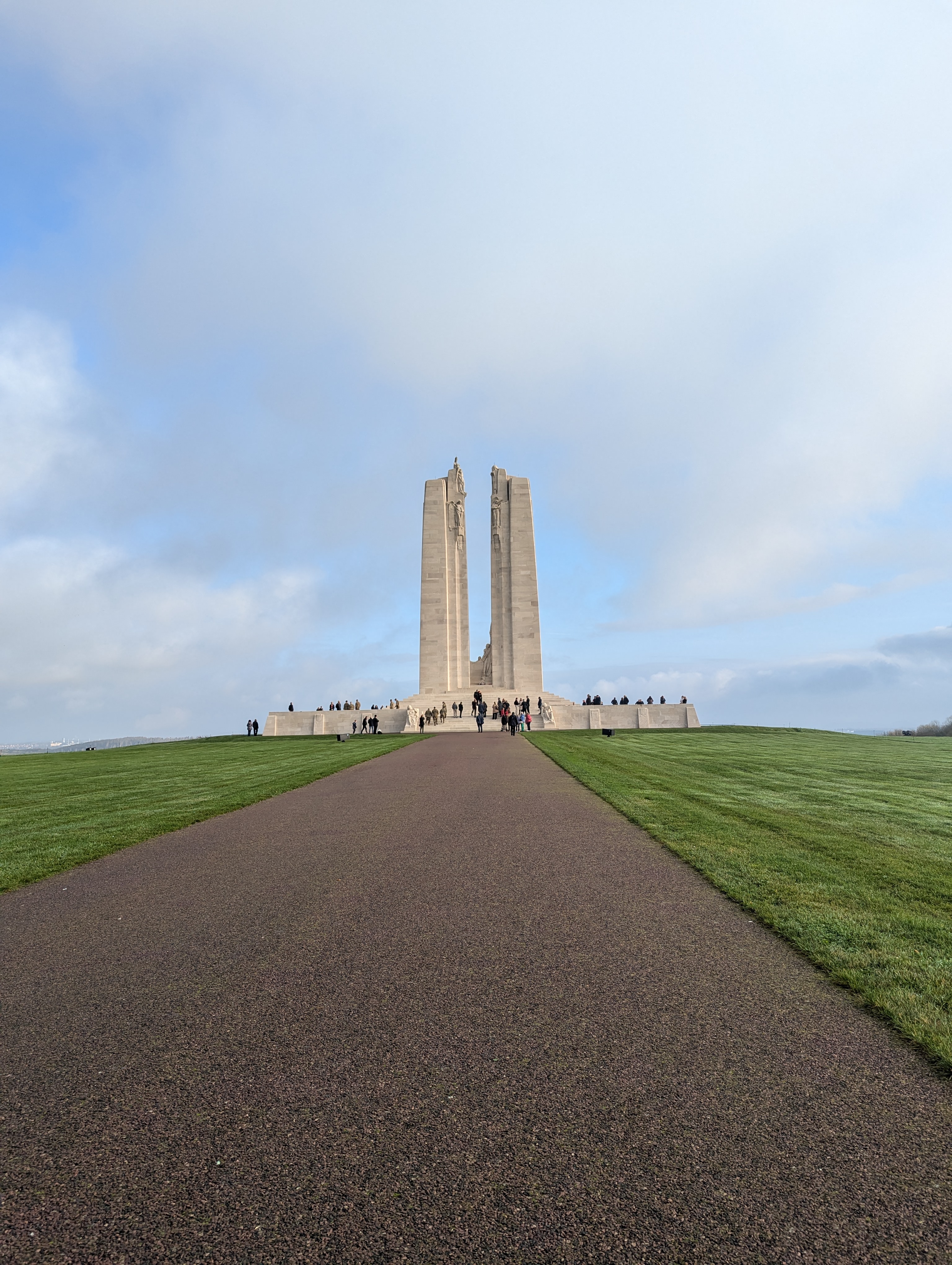
Break for lunch in Arras, roughly halfway between the two sites. Then finish the day at the Canadian National Vimy Memorial, just 30 minutes from Lille. Walk the trenches and craters, take the guided tunnel tour, and then stand beneath those towering twin pylons. Vimy is where four Canadian divisions fought together for the first time, and it's hard to describe the pride you feel standing there.
Talk to the guides
The guides at both Vimy and Beaumont-Hamel are university students from across Canada. It's a competitive program, and it shows. They know these sites inside out and are happy to share stories that never made it onto the plaques.
If you want a primer before you go, Join Us in France has a great episode on Vimy Ridge (episode 519) with one of the guides, Felix. We happened to visit about a week after it came out, met Felix in person, and told him how good it was. He was very modest about it.
One tip: the tunnel tour at Vimy is well worth planning ahead for. It can fill up.
Heading south instead?
If Lille is a stop on a longer trip toward Normandy, flip the order. Start at Vimy in the morning, have lunch in Arras, then do Beaumont-Hamel in the afternoon. From there you're not far from the coast, and ending a day like that in Étretat, Honfleur or Deauville is a lovely way to come up for air before continuing on to Juno Beach.
You'll need a car
These sites are spread across the countryside, and public transport to them is patchy at best. A rental car (or a private guided tour) is really the only practical way to see them. If you're renting, get an International Driving Permit before you go. It's required in both France and Belgium, and it's quick to get from CAA or AAA.
If your tours are already arranged, you can skip the car entirely. There's a direct train from Paris to Lille.
And then there's Lille itself
This is the part people skip, and they shouldn't. Give yourself at least one full day in Vieux Lille. Its cobblestone lanes are full of little cafés, vintage shops and independent boutiques, and it feels like a city people actually live in rather than one built for tourists.
For dinner, find an estaminet, a traditional Flemish tavern. Order the carbonnade, a dark beef stew cooked in beer, or waterzooi, a creamy Flemish soup. It's exactly the kind of hearty food you'll want after a day at the memorials. And if you're there on a Sunday morning, the Marché du Vieux-Lille is a lovely way to wind down before heading home.
We've been to Lille four times now, for concerts, for family visits and for the battlefields. Every time, we find something new.
Plan the whole trip: our full four-day itinerary, with the exact Flanders Fields timings, restaurants and where we stay, is at planyourvacay.com/ww1battlefields.
Listen to the episode: Annie and I cover Lille, the battlefields, Metz, Nancy and Alsace on Join Us in France, episode 621.