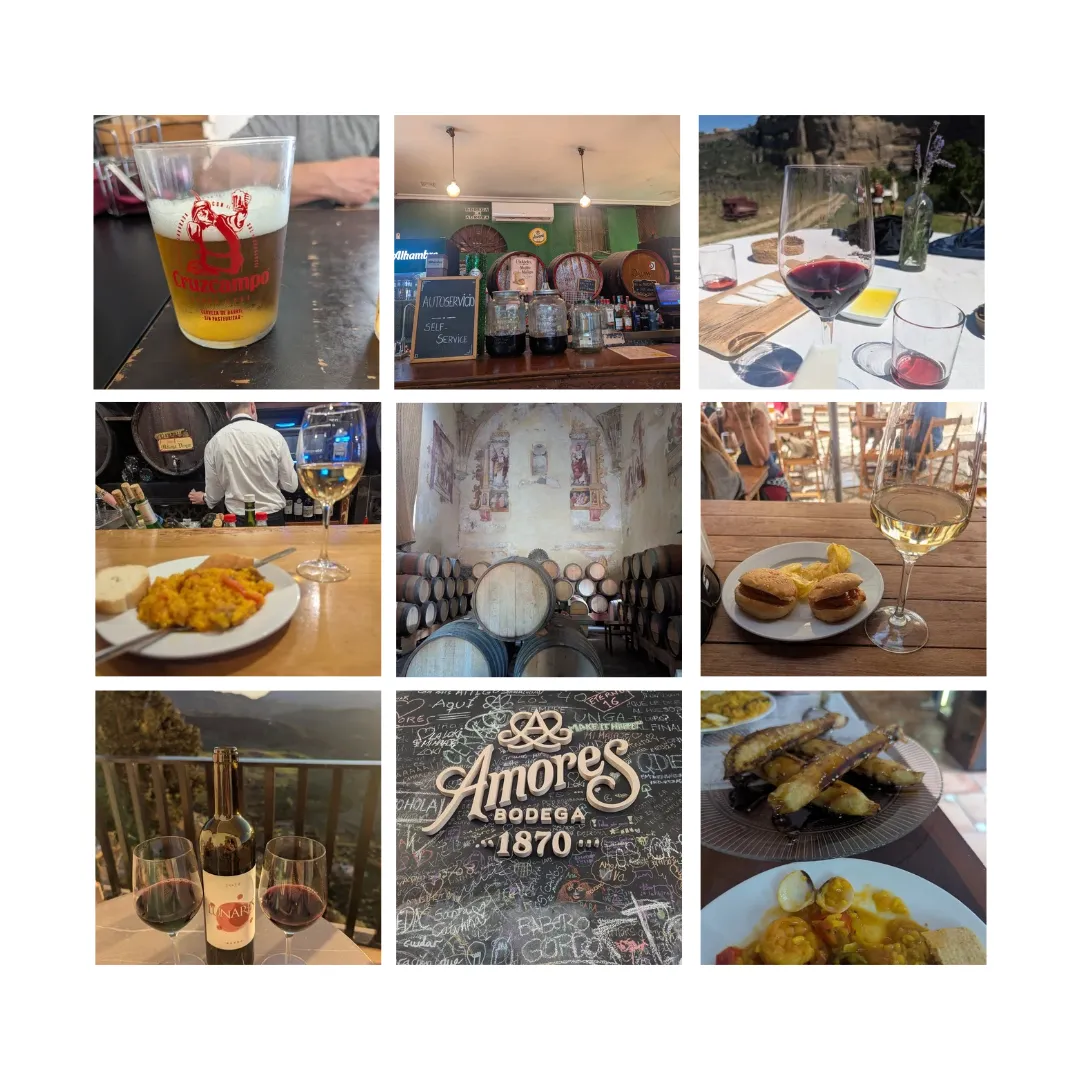
Love at First Tapa: Eating and Drinking My Way Through Andalucía
If our twelve days in Andalucía had a secret ingredient, it was the food. (If you missed it, here's why Southern Spain might be my favourite Euro vacay ever.) Every city on our loop had its own flavour, its own drink, and its own way of turning a simple meal into an evening. Here's what we ate, what we drank, and where we'd go back to in a heartbeat.
Ronda: Wine With a View
Ronda surprised me. I came for the Puente Nuevo and left thinking about the wine. The Serranía de Ronda is a small, young wine region tucked into the mountains around the town, and it's full of passionate, independent winemakers doing things their own way.
The highlight was Samsara Wines, a small winery with a view of the Puente Nuevo, excellent wine, and a winemaker whose passion is contagious. It's the kind of tasting where you arrive for a glass and leave an hour later knowing the story behind every bottle.
If you have time for more, Descalzos Viejos makes wine in a restored former monastery just below the gorge, and F. Schatz was one of the pioneers of organic winemaking in the area. Doña Felisa and Joaquín Fernández round out a list that could easily fill an extra day.
For dinner, Bardal is Ronda's Michelin-starred splurge. For something more relaxed, its sister spot Tragata serves creative tapas from the same chef at a fraction of the price. It's the perfect way to taste what the kitchen can do without committing to a tasting menu.
Granada: The Land of Free Tapas
Granada is one of the last cities in Spain where every drink still comes with a free tapa. Not a bowl of olives. A real plate of food. Order a drink, and something delicious lands in front of you.
Here's the trick: order a caña. A caña is a small glass of draft beer, and because the tapa comes with every round, a smaller drink means more rounds, and more rounds means more tapas. Order a caña, enjoy your tapa, then order another and see what comes next. In many bars the tapa changes with each round, so you get to try more of the menu without ever ordering food. Not a beer drinker? A glass of wine or tinto de verano works just as well.
Our favourite evenings started high in the Albaicín and worked their way downhill through cobblestone lanes, with the Alhambra glowing across the valley. Some spots we loved:
Más que Vinos is where we had the most amazing berenjenas con miel: crispy fried aubergine drizzled with miel de caña, a sugar-cane molasses from the coast south of Granada. Sweet, salty and completely addictive. Pair it with a glass from their wine list and you'll understand why this dish is a Granada classic.
Taberna La Tana is a cozy, wine-focused tavern with a serious list of Spanish wines. Let the staff pick your glass. They know their stuff, and the tapa that comes with it is always good.
Bodegas Castañeda is a classic, old-school bodega near Plaza Nueva, with barrels on the wall and a lively, standing-room crowd. Ask about the house drink, the Calicasas, and go with it.
Mercado de San Agustín is Granada's food market, a short walk from the cathedral. Wander the stalls for local produce, cured meats and cheeses, or grab a seat at one of the food counters for a casual bite. It's a great stop for lunch between sights, or a break from the tapas crawl.
Tapas hopping in Granada isn't really a meal. It's an evening. Pace yourself, keep walking, and let the city decide what's for dinner.
Córdoba: Small City, Big Flavours
We only had one night in Córdoba, and I wish we'd had more, if only to eat more. The city has its own distinct food identity, and a few dishes you really shouldn't leave without trying:
Salmorejo was born here. It's like gazpacho's thicker, richer cousin: a cold, velvety tomato cream topped with jamón and chopped egg. Córdoba's version is the benchmark.
Flamenquín is a rolled, breaded and fried cutlet wrapped around jamón. It's hearty, a little decadent and completely worth it.
Rabo de toro, slow-braised oxtail, is rich, tender and a Córdoba favourite.
For all three, head to Taberna El Nº 10 in the heart of the Jewish quarter, just steps from the Mezquita. It serves traditional Córdoba cooking as tapas and raciones, with a lovely terrace among the old stone lanes, and it's recognized in the Michelin Guide without the Michelin prices. It's the perfect long lunch after the Mezquita.
To drink, look for wines from Montilla-Moriles, the local wine region just south of the city. Their finos are made from Pedro Ximénez grapes and are fresh, dry and perfect with salmorejo. Bodegas Alvear and Pérez Barquero are two of the region's historic names.
And then there was the Fiti-fiti. Some really fun locals at a random bar introduced us to Córdoba's special drink, and it turned into one of the best nights of the trip. Fiti-fiti is an old Córdoba tavern tradition: half dry fino and half sweet Pedro Ximénez, both from Montilla-Moriles, mixed in one glass. Crisp and dry meets rich and raisiny, and the result is smooth, a little sweet and dangerously easy to drink. That's Córdoba in a nutshell: you come for the Mezquita, and the people keep you out late.
Sevilla: Simply Wonderful Food
Sevilla was the perfect finale. The food scene is huge, lively and endlessly good, and it's easy to eat very well at any budget.
The best thing we did was a food and wine tour into local bars we'd never have found alone. If you only do one guided experience in Sevilla, make it this one. You'll eat like a local from the first stop. And once you've got the hang of it, step outside the tourist centre and eat where the Sevillanos do:
Bodega Amores is a lively corner bar in the Nervión neighbourhood, with high tables spilling out onto the street and a mostly local crowd. They do the classics very well. Try the ensaladilla with prawns and the carrillada (braised pork cheek) with a glass of manzanilla.
Tapas Viapol is tucked off the beaten path, and the moment we sat down, we knew we'd found a true local lunch spot. The room was full of Sevillanos, not tourists, and everything we ordered was delicious. If you want to eat the way the city actually eats, this is the place.
La Catedral de la Tapa lives up to its name. Come hungry and order a spread to share.
A few dishes to look for: espinacas con garbanzos (spinach and chickpeas with cumin), montaditos de pringá (small sandwiches of slow-cooked meats), and anything with jamón ibérico. And with Jerez just down the road, this is the place to fall for sherry. Bodegas Lustau and González Byass are two big names to look for on a menu, or to visit on a day trip.
A Few Tips for Eating Your Way Through Andalucía
Eat late. Lunch runs from about 2 to 4, and dinner rarely starts before 9. Order tapas a few at a time, since they come fast and you can always order more. In Granada, order the caña. And everywhere else, trust the locals. Some of our best meals came from a recommendation at the bar.
Plan your own Andalucía food and wine loop with our full itinerary →