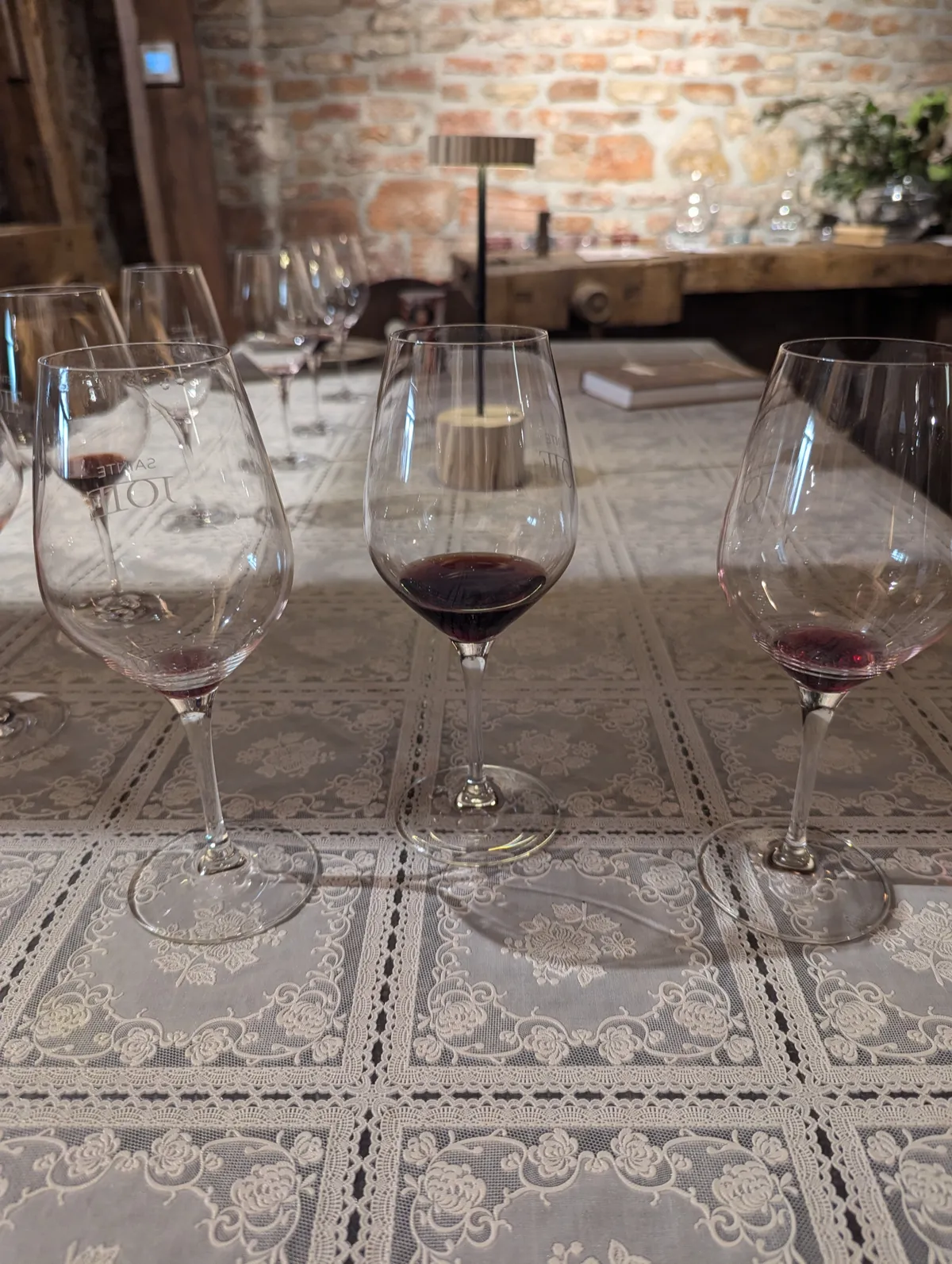
A Beginner's Guide to Alsace Wine
Alsace is one of the most underrated wine regions in France. You can find excellent wine here at great prices, in some of the prettiest villages in Europe. When planning your visit to this region, be sure to plan some time to discover this wonderful wine.
The whites are crisp, the reds are lovely, and Crémant d'Alsace might be the best value-for-money sparkling wine you'll ever drink.
If you like wine but have never really explored Alsace, this quick guide covers what to look for. No expertise needed.
Alsace wine at a glance
A few things make Alsace different from the rest of France, and they make it easier for beginners.
Wines are labelled by grape. Most French wines are labelled by place, so you have to know what grows where. In Alsace, the grape is usually right on the label: Riesling, Pinot Gris, Pinot Noir.
It's mostly white. About 90% of Alsace wine is white, and that's where the region shines.
Look for the tall, slim bottle. Alsace still wines come in a tall, narrow bottle called a flûte. It makes them easy to spot on a shelf.
The setting is half the fun. The Alsace Wine Route runs through vineyards and half-timbered villages like Eguisheim, Riquewihr and Kaysersberg, with tasting rooms on almost every street.
Riesling (and no, it does NOT have to be sweet)
If you think Riesling means sweet, Alsace will change your mind. Most Alsace Riesling is dry: crisp, fresh and bright, with notes of lemon, green apple and sometimes a mineral, almost stony edge.
Riesling is the king of Alsace grapes and the one to try first. It's great with seafood, white fish, choucroute and anything with a bit of richness that needs freshening up.
How to tell if it's dry: Check the back label. Many producers now show a sweetness indication, from sec (dry) to demi-sec (off-dry), moelleux (sweet) and doux (very sweet), often on a small scale. If you're unsure, just ask for a dry one ("un Riesling sec") at the tasting room.
Crémant d'Alsace: amazing value for money
Crémant d'Alsace is made the same way as Champagne, with the second fermentation in the bottle. That's where the fine bubbles come from. It costs a fraction of the price, and the good ones can stand next to Champagne happily.
It's one of the best-selling sparkling wines in France after Champagne, and once you try it, it's easy to see why.
The grapes behind it:
Pinot Blanc: The backbone of most Crémant. Soft, fresh and easy to love.
Auxerrois: Often blended with Pinot Blanc for a rounder, gentler style.
Riesling: Adds zing, citrus and a lively finish.
Pinot Gris: Brings a little more body and richness.
Chardonnay: Used in some of the more elegant, Champagne-style bottles.
Pinot Noir: The only grape allowed in Crémant d'Alsace rosé, and it's lovely.
What to look for: "Brut" means dry, and it's the most common style. If you like really dry (under 3 g/L residual sugar), look for "Brut Nature". "Blanc de Blancs" is made from white grapes only, and "Blanc de Noirs" from Pinot Noir. A rosé Crémant is a great pick for an aperitif in the sun.
Pinot Noir: the red of Alsace
Pinot Noir is the only red grape grown in Alsace, and it's well worth trying. Expect a light to medium-bodied red with red cherry, raspberry and a gentle earthiness. It's silky and easy to drink, not heavy.
Alsace Pinot Noir has come a long way in recent years, and the best producers now make serious, elegant reds. Serve it slightly cool. It's lovely with roast chicken, duck, mushrooms or a cheese board, and it can even work with fish.
The other grapes worth knowing
Once you've tried Riesling, Crémant and Pinot Noir, these are the next ones to explore.
Grape | What it tastes like | Try it with |
|---|---|---|
Gewurztraminer | Very aromatic: lychee, rose, ginger. Rich and often slightly off-dry. | Spicy food, Asian dishes, Munster cheese |
Pinot Gris | Full-bodied and smooth, with ripe pear, peach and a hint of smoke. | Roast pork, poultry, creamy dishes |
Pinot Blanc | Light, fresh and easy-going. A great everyday white. | Tarte flambée, salads, light lunches |
Muscat | Dry in Alsace, but smells like fresh grapes. Light and floral. | Aperitif, asparagus |
Sylvaner | Crisp, light and refreshing, with a slightly green, herbal edge. | Seafood, quiche, a sunny terrace |
You may also see Edelzwicker or Gentil on a wine list. These are blends of Alsace grapes, usually good value and perfect for a casual meal.
How to read an Alsace label
A few words on the label tell you a lot about what's in the bottle.
AOC Alsace: The standard appellation. Plenty of excellent, great-value wine sits here.
Grand Cru: Wine from one of Alsace's 51 top-rated vineyards. You'll see the vineyard name on the label, like Hengst or Schlossberg. It costs more, and it's a step up in quality and character.
Lieu-dit: A named vineyard plot that isn't a Grand Cru. These are often a sweet spot between quality and price.
Vendanges Tardives (VT): Late harvest. These wines are rich and usually sweet.
Sélection de Grains Nobles (SGN): Very sweet dessert wine made from shrivelled, concentrated grapes. Rare and special.
If you're after a dry wine, steer clear of VT and SGN and check the back label for a sweetness indication. "Sec" means it is dry.
A winemaker to start with: Sainte Joie
If you want one name to look for, make it Sainte Joie. Their wines are excellent, and they're the winemaker we'd point any first-timer to. Start with their Crémant d'Alsace: it's the perfect introduction to why Alsace bubbles are such good value.
Beyond that, part of the fun of Alsace is discovering your own favourites. With so many small, family-run wineries, there's always a new tasting room around the corner.
Ready to taste?
Start with a dry Riesling, a glass of Crémant and a Pinot Noir, and you'll have a great feel for the region. Then let your taste buds lead you to the rest.
Wondering how to actually taste your way through Alsace? Read our guide to the 5 ways to taste wine in Alsace